
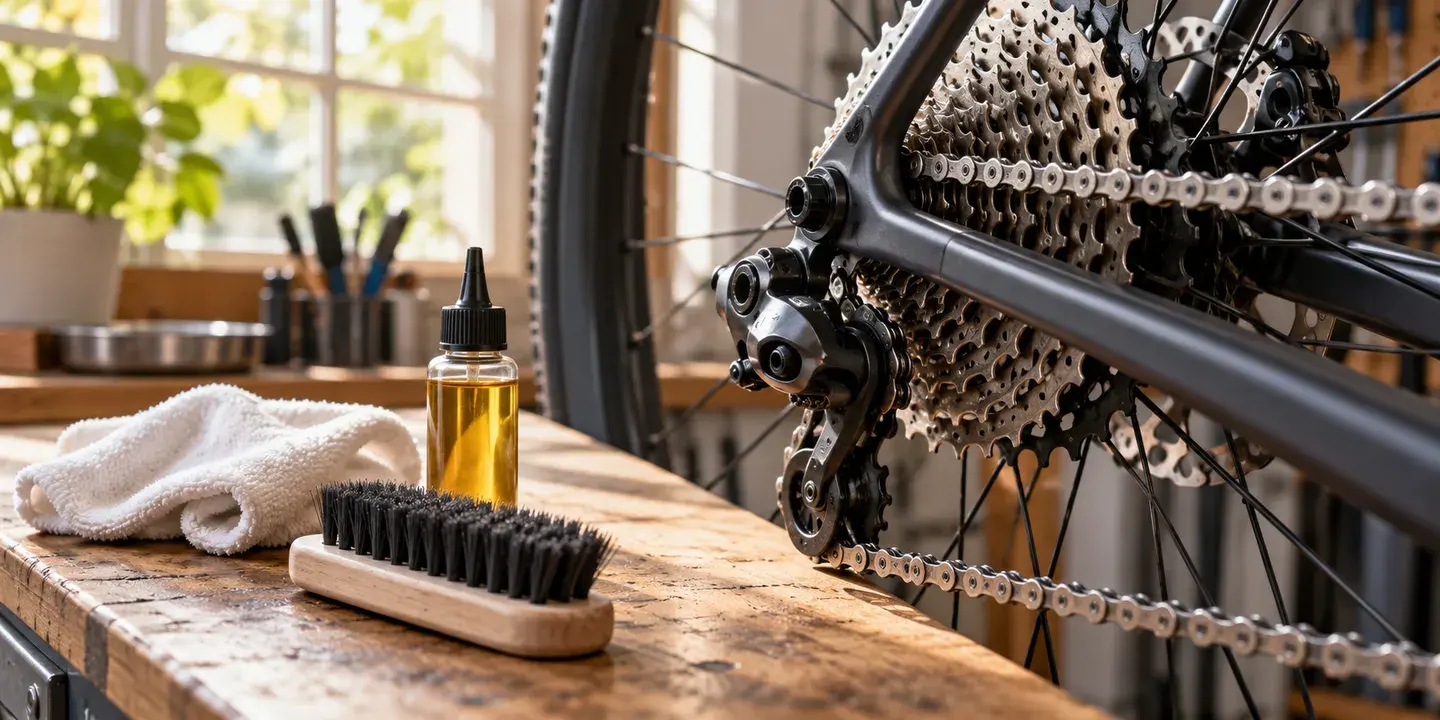
A clean, appropriately lubricated chain is part of a practical bicycle maintenance routine. Road grit, dust and old lubricant can build up on the drivetrain, while riding in rain can leave the chain needing attention sooner. The right interval depends on where and how you ride, so inspect your own bicycle instead of relying on a fixed number of rides.
This guide covers an ordinary externally geared bicycle chain. Your bicycle, chain, lubricant and cleaner may have specific instructions; check those first. If your bicycle has an enclosed drivetrain, an e-bike motor, internal gearing or an unusual finish, follow the maker's cleaning guidance and avoid spraying electrical components.
Gather supplies and protect your workspace
Choose a bicycle-compatible degreaser, chain lubricant, soft brush, clean cloths and a container for used cleaner. Gloves and a protective apron can make the job less messy. A bicycle stand is convenient, but the bike should be stable in any setup. Keep fingers, loose clothing and tools clear of the moving chain, chainrings and rear cogs.
Read the labels before using any cleaning product. Follow their ventilation, surface compatibility and disposal instructions. Protect the floor from drips, and keep degreaser and lubricant away from brake pads and rotors. Contaminated braking surfaces can compromise braking and may require professional service.
The Park Tool chain-cleaning guide lists a chain-cleaning device, bicycle degreaser, lubricant and cloths among its suggested supplies. You can use the method and tools specified by your own chain and cleaner manufacturers; a powered washer is not necessary.
Inspect the chain before washing
Look for damage, stiff links, corrosion and heavy deposits. If the chain is worn past its manufacturer's replacement limit, cleaning will not restore its dimensions. A compatible chain-wear tool can help you check wear; our chain checker guide explains what to consider. Ask a qualified mechanic to inspect damaged links or a drivetrain that does not shift correctly.
Check nearby parts too. Worn teeth, loose components or unusual sounds deserve attention separately from routine cleaning. Do not put a bicycle back into use if you are unsure whether its drivetrain or brakes are safe.
Remove dirt with a compatible cleaner
Apply the cleaner according to its label and the chain maker's directions. A chain-cleaning tool can contain some of the mess; alternatively, use an appropriate brush and cloth where the manufacturer permits. Turn the crank slowly by hand while keeping your fingers away from pinch points. Work through the links rather than concentrating on one section.
Wipe accessible dirt from the chainrings, cogs and derailleur pulleys with suitable brushes or cloths. Keep separate cloths for drivetrain grease and other parts of the bicycle. Avoid forcing water into bearings or spraying cleaner onto brakes. On an e-bike, follow the electrical system manufacturer's guidance before washing and protect connectors and the drive unit as directed.
If the cleaner instructions call for rinsing, use the method they specify. Park Tool's bicycle washing guidance recommends low pressure and a wide spray when using a hose. Collect and dispose of used cleaner according to its label and local rules; do not pour it onto the ground.
Dry before adding lubricant
Run the chain through a clean, dry cloth with the crank moving slowly, and allow it to dry. A damp chain can dilute or interfere with a lubricant that needs a dry surface. Read the lubricant label for any preparation or waiting period, since wax-based and other formulations can have different requirements.
Drying is also a useful chance to inspect the chain again. If a link remains stiff or looks damaged after cleaning, stop and have it checked rather than trying to conceal the problem with extra oil. Keep hands and cloth clear of the chainring and derailleur as the chain moves.
Apply a bicycle chain lubricant
Use a lubricant intended for bicycle chains and suited to your conditions. Park Tool describes wet, dry and wax-based formulations in its lubricant guide; their handling and performance vary, so follow the specific product instructions. A general-purpose penetrating oil is not a substitute for regular chain lubrication.
Apply the product to the chain as directed while turning the crank slowly. For the oil used in Park Tool's example, a small drop is applied to each link, followed by wiping excess from the outside with a clean cloth. Your product's instructions take precedence, including any required curing time. Avoid getting lubricant on tires, rims, rotors or pads.
Once complete, turn the drivetrain by hand and check that everything moves freely. Check braking before riding. Store chemicals closed and away from children and pets, following their labels. Make a note of the date and riding conditions so you can judge when your chain next needs a look.
Frequently asked questions
Can I use the same cloth for the chain and brake rotors?
No. Keep greasy drivetrain cloths separate from brake-cleaning supplies to reduce the risk of contamination. Follow your brake manufacturer's service instructions.
Does a clean chain still need lubricant?
After cleaning and drying, apply a suitable chain lubricant according to its instructions. Park Tool specifically recommends relubricating a chain after cleaning.
Should I use more oil if the chain makes noise?
First inspect the chain and drivetrain. Noise can have several causes, including wear or adjustment problems. Seek a mechanic's help if the cause is unclear.
The cover is an AI-generated editorial illustration, not a photograph of a specific bicycle or product.