
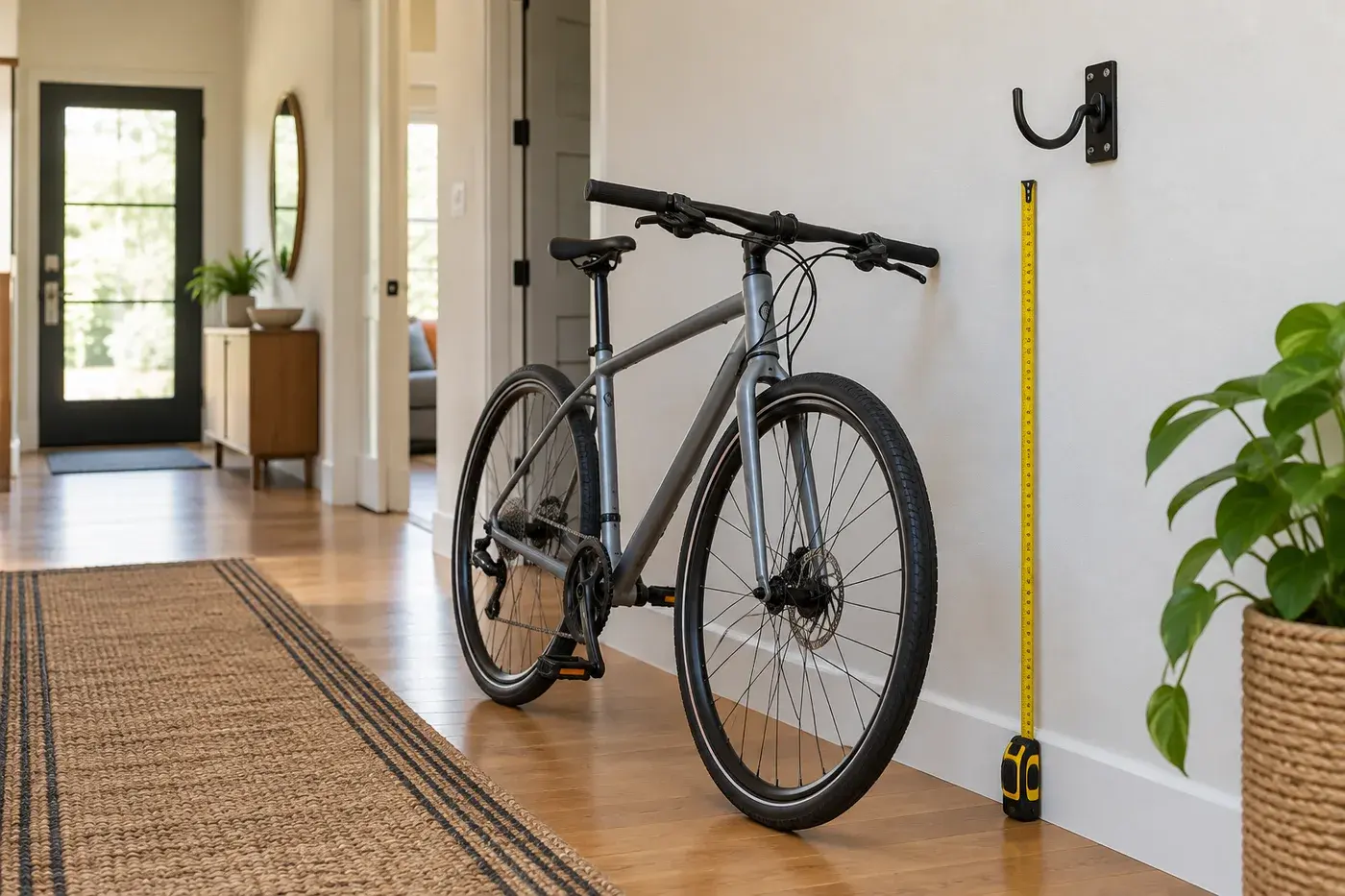
Finding a place for a bicycle at home is about more than whether the frame fits against a wall. Doorways, turning space, the bicycle's weight and the rack's instructions all affect how easy it is to put the bike away and take it out again. Use this checklist to plan a practical indoor storage spot before buying a stand or wall mount.
Measure the bicycle and the route
Start with the bicycle you actually own. Measure its overall length, handlebar width and height, including accessories such as fenders, a rear rack, lights or a basket. Note any parts that extend beyond the frame. If the handlebars turn, check both their straight and turned positions rather than assuming the narrower number applies while you move the bike.
Measure the doorway, hall and turns between the entrance and the planned parking place. A bicycle may fit in the final space but still be awkward to maneuver around a tight corner. Leave room for your hands and for the path other people use. If the spot is shared, check that doors, cabinets and emergency exits remain clear.
Decide whether the bike needs to be lifted
A floor stand can be convenient when lifting the bike is difficult. A vertical or overhead rack may save floor space but asks you to raise and control some or all of the bicycle's weight. Before choosing, consider who will use it, how often and whether they can do so comfortably without damaging the bicycle or the room.
For electric bicycles, weight deserves particular attention. Trek's electric bike care guide notes that e-bikes can be heavy and suggests a safe ground-level storage location. Check the weight and handling instructions for your own bicycle, and do not assume a rack rated for a conventional bike is suitable for an e-bike.
Check the rack's specifications
Read the rack maker's installation guide, maximum load and compatibility notes. Compare the listed limits with the weight of the bicycle as it will be stored, including any fitted accessories. Check whether the rack supports the wheel, frame or another part and whether it accommodates your tire width, wheel size, frame shape and fenders.
If wall mounting is involved, the surface and fasteners matter as much as the rack itself. Follow the manufacturer's instructions for your wall material and use appropriate fixings. If you cannot establish a secure installation, ask a qualified installer. Never assume that a decorative wall panel or a convenient screw will hold the load.
Protect the bike and the room
Plan where the tires, pedals and handlebars will touch. Keep the bicycle away from areas where it can be knocked over by a door or passing person. A removable floor mat can help contain ordinary dirt, while a rack designed for the bike can provide a repeatable place to park it. Follow the rack instructions before adding padding or changing any contact point.
Check cables, hoses and accessories for clearance as you move the bicycle into place. Do not force a tight fit or hang a bicycle from a component unless the rack and bicycle manufacturers permit it. If you are comparing bicycles, review the dimensions and accessories of the exact product rather than relying on a category name.
Consider the conditions
Choose a dry location and follow the bike maker's care guidance. For an e-bike, consult the manual for battery storage and charging; batteries and drive systems differ. Trek recommends considering temperature when storing its e-bikes and discusses bringing the battery indoors in extreme conditions. Use the instructions for your own battery and never open or modify it.
If the bicycle comes in wet or muddy, follow its cleaning instructions and allow it to dry appropriately before putting it into a confined space. Keep any charging area clear and use only the charger specified for the exact system. If the battery appears damaged, stop using it and consult the manufacturer or a qualified dealer.
Rehearse the daily routine
Before drilling holes or ordering a rack, trace the route with the bicycle and consider where it will stand while you unlock the door. Test the available space without blocking the path. A storage solution is most useful when the bicycle can be removed without moving furniture or lifting it over another object.
Keep a short note of the bike's dimensions, weight and accessories with the rack instructions. If you later change tires, add a basket or purchase another bicycle, check the fit and load limits again. Explore the Anscycle bicycle collections for equipment to compare, and verify the dimensions of the specific listing before ordering.
Frequently asked questions
Is a wall rack suitable for every bicycle?
No. Check the rack's load limit, mounting requirements and compatibility with the exact bicycle, tires and accessories. Follow the bicycle maker's instructions too.
Should an e-bike battery stay on the bike in storage?
Follow the instructions for the specific battery and bicycle. Temperature, duration and whether the battery is removable can change the recommended approach.
The cover is an AI-generated editorial illustration, not a photograph of a specific bicycle or storage product.