
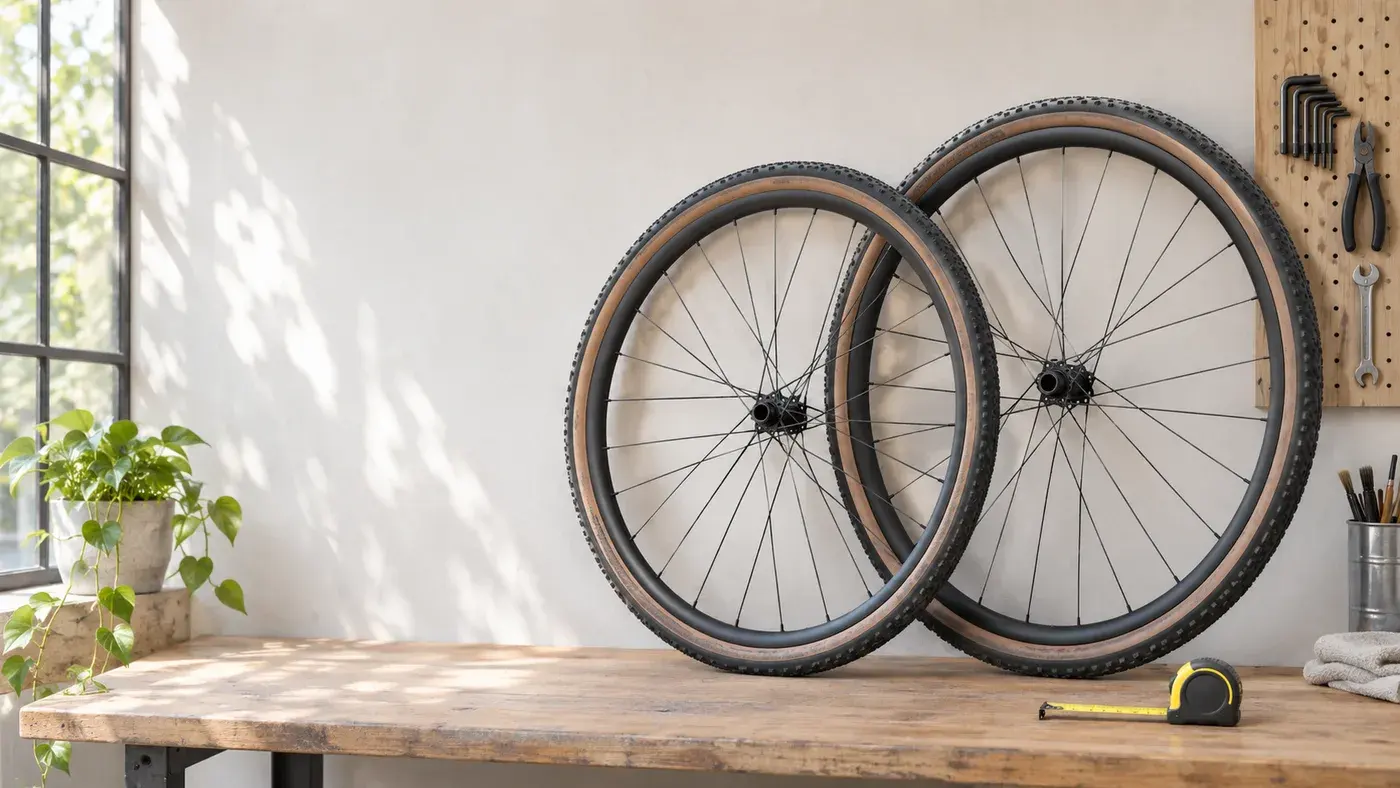
Gravel bicycles appear with different wheel and tire sizes, but choosing between 650b and 700c is more than a question of preference. The wheel, tire, frame, fork and brake system must work together. Before ordering parts, identify the exact bicycle and consult the manufacturer's specifications for that model and year.
This checklist helps you gather the information for a shop or component supplier. It is not a guarantee that a different wheel size will fit, and it does not replace an inspection by a qualified mechanic. If you are unsure about an axle, brake or tire mounting system, ask a professional before riding.
Begin with the bicycle's approved sizes
Find the model name, frame size and year. Check the bicycle manufacturer's manual or official specification chart for approved wheel and tire sizes. A similarly named model from another year may have a different frame or fork. If the manual lists only one size, do not assume a second size is supported merely because it is common on other gravel bikes.
As one example, Trek's 2022 Checkpoint SL/SLR service manual lists separate maximum tire widths for 700c and 650b wheels without fenders. Those limits belong to the models covered by that manual; they are not universal clearances for all gravel bikes. Accessories and other conditions can further restrict available space.
Make a note of the manufacturer's limits and any conditions attached to them. If you use fenders, a rack or other accessories near the wheels, check their instructions as well. A wheel that can be installed is not necessarily an approved or safe setup.
Read the tire and rim markings
Wheel names can be confusing because they mix traditional labels and measurements. Use the tire's standardized bead-seat diameter and width markings alongside the wheel maker's compatibility information. Schwalbe's tire-dimension guidance discusses the importance of frame clearance and the compatible tire types and widths specified by the rim manufacturer.
Do not assume that all tires carrying a familiar label will fit the same rim. Check the bead-seat diameter first, then the approved tire width and whether the combination supports the intended tube or tubeless setup. Tire, rim and sealant instructions may impose additional limits. If the markings are unclear, bring the wheel to a bicycle shop rather than ordering by appearance.
An existing article explains how to read bicycle tire sizes. That guide can help you record the numbers, but the exact component manuals determine which combinations are approved.
Check real clearance, not just a catalog number
The installed tire must have adequate room at the fork, frame and any nearby accessory. Published widths are useful for comparison, but actual mounted dimensions can vary with the tire and rim. Schwalbe notes that tire dimensions are subject to tolerance and that adequate frame clearance matters. Follow the bicycle maker's method and minimum-clearance requirement rather than inventing a universal measurement.
Check the full circumference after the wheel is correctly installed and inflated within the applicable limits. A mechanic can inspect areas that are difficult to see and assess whether mud or debris could reduce clearance. Do not ride if a tire rubs the frame, fork, fender or another component.
Match axles, hubs and brakes
Wheel diameter alone does not establish compatibility. Identify the axle type and dimensions, front and rear hub spacing, and the brake interface specified for your bicycle. Disc-brake systems require suitable rotors and correct alignment; drivetrains also require a compatible freehub and cassette. These specifications vary between bicycles and wheelsets.
Record the existing parts or have a mechanic identify them. Avoid mixing adapters or fasteners unless the relevant manufacturers explicitly approve the combination. After installation, the wheels and brakes must be secured and checked according to their manuals before any test ride.
Consider tires and the routes you ride
A smaller-diameter wheel may be paired with a wider tire on some approved frames, but the tire's actual width, construction and pressure range matter as much as its nominal diameter. A larger wheel is not automatically the best choice for every rider or surface. Compare complete, approved wheel-and-tire combinations instead of a label alone.
Trek's gravel-bike buyer's guide discusses choosing tire width for the terrain while checking that it fits the wheels and bicycle. Think about the surfaces you actually use, whether you carry luggage, and the service options available on your route. Consult the tire and rim makers for pressure limits; do not copy another rider's pressure without checking your own equipment.
Prepare questions before buying
Write down the bicycle model and year, current tire markings, axle details, brake type and intended tire size. Ask the wheel and bicycle manufacturers whether the exact combination is approved and whether accessories alter the maximum clearance. Confirm any required rotor, cassette, tube, valve or tubeless components with the supplier.
After a professional installation, follow the manufacturer's pre-ride checks and inspect the brakes and wheels. Explore the Anscycle gravel-bike collection when comparing bicycles, and verify the specifications of the individual listing.
Frequently asked questions
Can every 700c gravel bike use 650b wheels?
No. Check the frame, fork, axle, brake and tire clearances for the exact bicycle and wheelset.
Does a wider tire always fit a smaller wheel?
No. The rim, tire, frame and accessories all have limits that must be checked together.
Can I use the same pressure after changing tires?
Do not assume so. Follow the applicable tire, rim and bicycle instructions for the new combination.
The cover is an AI-generated editorial illustration, not a photograph of a specific product.